Filmmaking: Carter Aakhus

Note: This episode was recorded in February 2026.
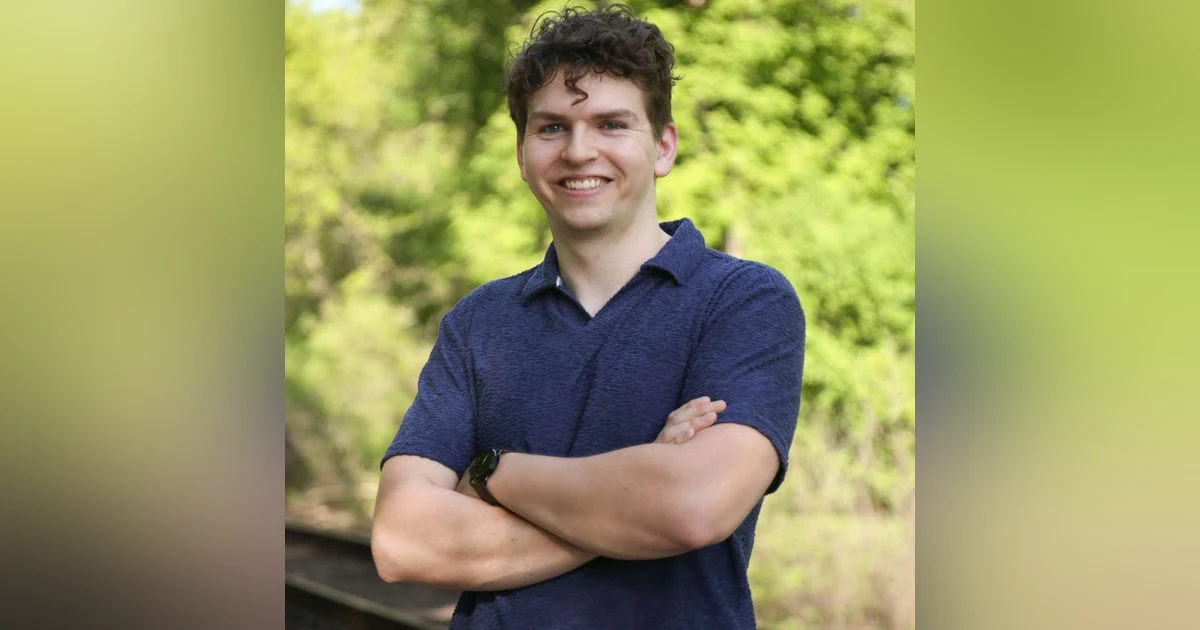
Carter talks about his latest short film, "Twenty-Nine Blocks", which has seen success on the film festival circuit this year, with screenings at the Hello From Fargo Film Festival, Unspooled Film Festival, as well as the upcoming Eagan Film Festival and Red Cedar Film Festival. Carter talks about making this short film with a small crew, finding your own voice as a filmmaker, and where he finds inspiration for his films.
Carter also talks about how the character and history of Twin Cities locations lend themselves to making movies, and what he would tell young local filmmakers who feel they have to move to a city like Los Angeles or New York to be successful.
"Twenty-Nine Blocks" Letterboxd
00:00 - Introduction to Carter and "Twenty-Nine Blocks"
03:00 - Carter's Previous Work and Finding His Voice
06:24 - Ideas and Inspirations for "Twenty-Nine Blocks"
08:26 - Cinematography and Directorial Choices
12:43 - How Carter Got Started and Met His Collaborators
14:14 - Advice to Young Filmmakers Who Think They Need to Move
14:48 - Making Art During the 9 to 5
15:38 - Production Challenges and Perseverance
18:32 - Filmmaking Experience in the Twin Cities
20:06 - Future Projects and Process
23:31 - Where to Find Carter's Work
24:06 - Final Thoughts
Introduction to Carter and "Twenty-Nine Blocks"
SPEAKER_00
Hi everyone. This is the first ever episode of Working Artists, Artist Working. Very exciting. I want to thank the guest who has joined me for the very first episode of this show to talk about his short film, 29 Blocks. It was shot all right here in the Twin Cities, where we are recording this show. And today we're going to find out more about his filmmaking experience and uh his experience making films in the Twin Cities in general. Carter, thank you so much for joining me on this very first episode of Working Artists, Artist Working. How are you doing today?
SPEAKER_01
Very good today. Thank you for having me. It's a pleasure and an honor to be here for the first episode.
SPEAKER_00
And actually, Carter, can you please state your full name for the reference?
SPEAKER_01
Yes, Carter and then AUKUS AAK H-U-S. It gets it's been butchered every which way.
SPEAKER_00
So Carter, can you please tell me what 29 blocks your short film is about?
SPEAKER_01
So it's about a lonely young man who's riding the Minneapolis light rail, the blue line. You don't really know where he's going at first, what he's doing, but he's journaling in his notebook to himself, kind of reiterating some of his mantras and kind of working through his thoughts. When he gets interrupted by this strange fellow on the train and starts trying to make friendly conversation, but it's not very welcome to the main character. When it sort of just continues on from there, the other gentleman's name is Ron, played by my good friend Adam Keela. And he ends up kind of following the main character, the protagonist, through the streets of Minneapolis, and it's it just kind of spirals and continues. And these two are kind of on their own paths.
SPEAKER_00
Now you've been making short films for a long time, is that right?
SPEAKER_01
Very long time, yeah. I mean, in terms of uh a proper short film, my first proper short film with a script and everything wasn't until eighth grade for me, but I've been making films with my friends since fourth grade.
SPEAKER_00
That is a very long time. How many short films would you say you've made?
SPEAKER_01
Ooh, I'd say it'd be a reasonable estimate to say 15 to 20.
SPEAKER_00
Incredible accomplishment. And 29 blocks is your latest one.
SPEAKER_01
My latest one, yes. We shot it two years or about a year ago and just put it out this last October.
SPEAKER_00
Very, very cool. How's the reception for you of 29 blocks been so far?
SPEAKER_01
It's been pretty encouraging. I'd like to have it reach a wider audience of people that I don't know personally, but my normal audience of family and friends and um and others that that follow me on social media have uh responded with good feedback and have told me they've enjoyed it a lot, that they, you know, it made them laugh at the right parts and that they were entertained by it, and that they enjoyed kind of the scenery of Minneapolis that I featured in the film. Overall, it it did achieve the reaction I was hoping for. Obviously, I'd like to have it be on a bigger scale at some point.
SPEAKER_00
Absolutely. And you weren't just the writer and director of 29 blocks, you also edited it, correct?
SPEAKER_01
I did, yeah. Very small crew on this. It's sort of a, you know, it's a no-budget, scrappy short film. So I have my friends help me on it, but in terms of the the primary roles of like writer, director, editor, is all me. Yes.
SPEAKER_00
That is pretty incredible. Now, you've
Carter's Previous Work and Finding His Voice
SPEAKER_00
typically done the majority of the work on your short films that I've seen. I would say you've not only wrote and directed them, but you've also edited them. Is that correct?
SPEAKER_01
That's correct, yes.
SPEAKER_00
How would you feel that all of the short films you've made have led you to where you are now in terms of maturity as an artist?
SPEAKER_01
That is a good question because I think every short filmmaker, with their first few works, they kind of find themselves aping the works of the people they admire. You're reacting to the things that inspire you. So after a few attempts of that, you kind of start to find your own voice. After the last couple short films I've made, I've kind of found what's interesting to me. And that's sort of what's not said, obviously. Like there's a lot of issues and interpersonal dynamics that I think are often unsaid and unspoken in my films that I like to put a spotlight on. So my last few short films have kind of highlighted that more than my earlier stuff.
SPEAKER_00
And you know what's really interesting you mentioned that because I have seen other films from you. So I saw like Waldo's Big Night.
SPEAKER_01
Oh, old school, yes. That's high school.
SPEAKER_00
What was really interesting to me about that, it was just a really fun film, and I really do mean that as a compliment. It was just very entertaining. I really did see a lot of 1980s stuff in that. Like I like the sweat that you put on the characters' glasses and stuff. But also, too, there's this like whole other scene where he's just walking around town and his clothes are all dirty and he gets his car stolen. And I felt like a real 70s throwback in that, where it's just him by himself and the music and solitude. And I feel like solitude and loneliness really is a theme in like a lot of movies I've seen from you. Nice and nice and steady, I feel like is another one. Yeah. Can you maybe talk a little bit more about that?
SPEAKER_01
I wouldn't say I was very conscious of it at the time that I was making, say, Waldo's big night, my kind of post-COVID works. 29 blocks, nice and steady, and then the black spot. Even though the black spot I didn't write, it still has a lot of the those themes of character that it that kind of resonate with me personally. COVID was a very isolating and lonely time as it was for many people. There was a lot of self-reflection going on at the time, a lot of pain. The everyday kind of mundane struggles that we go through. There's a lot of that reflection during COVID found its way into my short films for sure.
SPEAKER_00
What stage of life were you in when COVID happened?
SPEAKER_01
Freshman in college. So I had my first semester, it was a normal semester, which I was lucky to have. And then second semester started in spring break and never came back. That's when COVID kind of exploded and everything shut down. And then I didn't have a normal year of school again until junior year, my third year of college.
SPEAKER_00
That must have been really tough. And I imagine you weren't doing any filmmaking or anything like that during that time.
SPEAKER_01
I mean, I was because so this is when I was living in in Moorhead, Minnesota. Uh Minnesota State University Moorhead has a film production program. That's what I was majoring in at the time. We were working on assignments for our classwork then, but a lot of it was solo work, a lot of it was editing exercises that we were assigned to do, writing, uh, but there weren't as many collaborative films being made at that time.
SPEAKER_00
I see.
SPEAKER_01
Yeah.
SPEAKER_00
I had graduated school by the time COVID had happened, but I I can't imagine going into college and just having the pandemic break all that apart. But I really do feel like your films have really sort of captured a certain sense of like being alone. But we also think of being alone sometimes as a negative experience, and I haven't really gotten that from your body of work.
SPEAKER_01
That's good.
SPEAKER_00
Let's
Ideas and Inspirations for "Twenty-Nine Blocks"
SPEAKER_00
go back into 29 blocks. What led you to that idea specifically?
SPEAKER_01
This idea specifically, it doesn't come from as deep of a place as you might expect. Like I just wanted to make something where I could utilize the production value in town. Like I don't have a budget to construct sets, I don't have a budget to do any uh any kind of sci-fi stories. I really enjoy movies that are like that kind of capture the energy of the streets. Like a lot of my favorite movies are things like The French Connection or To Live and Die in LA, William Friedkin movies, The Safty Brothers, Good Time. So stuff like that just captures my imagination, anyways. So I realized that's something I'm capable of doing. And that's what I kind of steered it around is like these locations around South Minneapolis and around the area that appealed to me and that I have a lot of love for. And I was thinking, what what kind of story can I shape around around these locations and why? And I thought the light rail would be an interesting location. What's this guy doing on the light rail that he wants to be left alone? And so it kind of just grew from there.
SPEAKER_00
I actually think you really succeeded. The scene where they're by the two characters are by Hiawatha Avenue and they're walking underneath the bridge. I thought you captured something about the city that was really beautiful. Can you tell me about your collaboration with your cinematographer a little bit?
SPEAKER_01
I I sure can. Tyler Hain is his name. He's my old buddy from college. So I met him my freshman year at Moorhead, and he's shot all of my projects with me since since then. So um it's he he has never lived lived in the in the metro area, but of course he's spent plenty of time here, and he also has a lot of appreciation for the locations that I do. Um, like he loves Matt's bar, he's been there a few times. Sure. Um, the trilon cinema he's been to, even though we didn't end up shooting outside directly the trilon, but like on that same street, he just has a great eye, and I trust him more than anyone in terms of his technical expertise. Like, I'm not someone who's an aficionado of lenses and um and sound equipment, and he's he's very educated on that. So he's he's my guy, he's my go-to guy.
Cinematography and Directorial Choices
SPEAKER_00
Let's go into the technical specs a little bit about 29 blocks, if you remember, because there may be some filmmakers who might be listening to this in the future and see your film.
SPEAKER_01
Yeah, I'll do my best.
SPEAKER_00
What did you shoot on? What was the camera you shot on?
SPEAKER_01
This is something where we might have to have uh an addendum because I do know, but it's been a solid year since I've even really been conscious of. Hold on. So it's the same camera that the movie The Creator was shot on.
SPEAKER_00
Sony FX3?
SPEAKER_01
Sony FX3 is the camera that my that my friend Tyler has.
SPEAKER_00
That is crazy.
SPEAKER_01
Yes. FX six, he also has. I think we used both.
SPEAKER_00
Gareth Edwards, I believe, was the director who shot the creator working with two cinematographers. And it's kind of crazy that like a camera that like we have at this community media station we're recording at, and that ordinary people can just get their hands on can be used to make images look really beautiful.
SPEAKER_01
It was very inspiring. I saw that movie with him and a few of my other friends at the time that it came out, and it's not a movie that I thought was like anything spectacular, but it was really inspiring that something that's like a consumer camera that's available to people could produce images that look stunning like that. Like it's a very good-looking movie.
SPEAKER_00
Were there any aesthetic considerations that went into using that specific camera or in how you captured certain sections of Minneapolis?
SPEAKER_01
I had known a year and a half ahead of shooting that he had that camera and he had told me that it was good in low light settings. We spent one night kind of out, there's a hill in Eden Prairie where I used to live that overlooks Valley Fair, the amusement park. We went out there with his FX3 and shot some test footage, and I just remember being really impressed with how much light it was able to take in, no additional light setup. And so I knew that it would be good in terms of shooting something on the fly on the streets of Minneapolis, like we ended up doing. So that definitely was in the back of my head when I was writing is like this won't be an unattainable project to be able to shoot something at night in the streets. Like, yes, we had some additional lighting that we that we used, but I knew that with this camera we wouldn't have too big of an issue.
SPEAKER_00
Did you have like a directorial approach? Because this movie is about two characters essentially the whole time. And I noticed that the way you shot it, it wasn't too flashy, but it somehow seemed to fit the story and the material perfectly. Did you storyboard during the production? Were you thinking about the character relationships in your directorial and visual choices? What was your process for that?
SPEAKER_01
I would love to say that Tyler and I work on storyboards together, but for one thing, I'm terrible at drawing. Even though I tried, and for certain assignments at school, I did have to write or draw storyboards. I myself don't need them to recall, like when I'm on set, what we need to shoot. So I just do a shot list. I did do a fair amount of like location scouting ahead of time. I knew the angles I wanted to get, I knew how I wanted the characters to be lit. Them being in front of Matt's bar with the red light dramatically, I thought that would look really great. The undertones of that particular scene that's set out in front of the restaurant. So yeah, no, no storyboards, but plenty of shot listing.
SPEAKER_00
And what do you think that the locations of the Twin Cities offered in your specific film? And what do you think they can offer to film in general? What was cinematic about them?
SPEAKER_01
The Twin Cities metro area really does get overlooked in terms of its beauty because some might look at it and just see, you know, another metro, a Midwestern city, but I think it has a lot of character. I think there's a lot of rich history and character in this town, even though it might not jump out to everyone. To me personally, it's it's very beautiful. And I think there's endless opportunity in terms of the locations that could be utilized around the city, around the entire state. We have a gorgeous state in Minnesota, plenty of locations that have yet to be utilized in any movie.
SPEAKER_00
Paul Thomas Anderson said, and I'm paraphrasing, you should beware of calling the setting of your movie like a character in the movie, just because the characters are the characters, they're the people.
SPEAKER_01
Yeah.
SPEAKER_00
But I do think that there is a lot of character to the locations of the Twin Cities. I've not ventured too far outside of the Twin Cities to the state of Minnesota, but just from what I know, the nature is very beautiful here. I think there is a growing film scene up north, actually. And those crews are currently taking advantage of those locations and those tax incentives.
SPEAKER_01
Yes, I was actually on a shoot that was being made on the Iron Range this last fall. Plenty of character on the Iron Range.
How Carter Got Started and Met His Collaborators
SPEAKER_00
Let's talk about how you got started in filmmaking and how you met your collaborators.
SPEAKER_01
Yeah. So I started filmmaking, like I said, when I was in fourth grade, and my good friend Andrew Nosall, who I've known since kindergarten, he doesn't have a designated role on 29 blocks, but he's pushing our wheelchair dolly. He was taking behind-the-scenes photos. He was there as an extra pair of hands, very helpful. He's a director in his own right. He and I worked together, acted in each other's stuff, wrote things together all throughout middle school, high school. He's in Waldo's big night. I've collaborated with him more recently, again, after graduating from college. Tyler Hayne, I've known since freshman year. He's shot all of my projects. Adam, who is the star of the film, he wrote my last short film, The Black Spot. And I have a lot of respect for his artistic vision. He has two feature-length, no-budget feature-length movies that he's done. He's a unique voice, and I've known him since high school. He worked with my friend Andrew in high school, so it's all interconnected. And then uh Jacob Newth, who's in the movie, went to high school with him. He's a year behind me. We worked on a few of the same projects, but this is the first time I've directed him in something.
SPEAKER_00
And you've known these people, it sounds like for a very long time.
SPEAKER_01
Yes. One more person I should mention is uh our composer. There's one piece of music in the movie, and that was written by my good friend Ethan Lambert, and I've known him since high school as well. It's a tight collective.
SPEAKER_00
I really do like the music in the movie. I really do think that it helped translate what the characters were going through and the whole vibe of everything going on perfectly.
SPEAKER_01
Good. I'm glad
Advice to Young Filmmakers Who Think They Need to Move
SPEAKER_01
you liked it.
SPEAKER_00
What would you say to a young filmmaker in the Twin Cities who's like, if I want to be successful, I need to move to Los Angeles or New York or somewhere else?
SPEAKER_01
Well, I would totally understand their decision and wanting to go where all the big movies are being made, where it seems all the work is, but going to somewhere like LA or New York, there's no guarantee that you'll have work in Minnesota. You can carve just as much of a path for yourself as you can anywhere else, if not maybe more so, just because the scene here is still up and coming. It's still growing.
Making Art During the 9 to 5
SPEAKER_00
How would you feel that your filmmaking output has changed now that you're in the workforce versus in school?
SPEAKER_01
I would say in some ways, in terms of my writing, it's picked up just because I have not wanted to get complacent with just, you know, falling into a nine to five cycle. Not that that's even my schedule, nine to five. I get to work at four o'clock in the morning, but I don't want to fall into the trap of, oh, I'm working, like I'm I'm tired, I don't need to write when I get home. Because of my desire to not fall into that mindset, I've gone out of my way to write more than I was in college, more than I was in high school. I don't have homework, things like that anymore to uh quote unquote distract from you know what I want to be doing on my own time. My output in in some sense has increased. Like, yes, it's harder to get short films
Production Challenges and Perseverance
SPEAKER_01
shot because 29 blocks, we tried to shoot that a whole year before we actually shot it. Wow. So it was that difficult to get our schedules all lined up. Wow. Which is ridiculous because it's four or five people that worked on this.
SPEAKER_00
Yeah.
SPEAKER_01
But Tyler Hain lives in Fargo. I live here. At the time I had only Wednesdays and Thursdays off, so I had to coordinate like when I'm gonna take time off to shoot. The weather had to be right. We tried to shoot in November of 2024, but it was way too cold the weekend we originally had lined up, so we had to push it back a good four months. So that's the biggest hurdle at this point, I think, is scheduling with everybody who also works full-time. My own personal drive to stay creative and to write has only gotten stronger, I think.
SPEAKER_00
I do think that part of success in filmmaking is persistence. So, what led you to stay motivated through all of those setbacks with the scheduling and everything like that?
SPEAKER_01
Just knowing that there's no reason why I can't make this specific short film. 29 blocks is not something that requires a high budget. It's not something that requires any really specific accommodations. It's it's just I need a few guys, we need to get out on the streets and we need to shoot this. It shouldn't be this difficult to get this made. We gotta make it happen. Some people could just throw on the towel and be like, oh, we'll kick the can down the road and figure it out later. But we just had to wait and trying to get things on the on the calendar and eventually we did.
SPEAKER_00
I love that tenacity a lot. What were some challenges you faced on the set of that production?
SPEAKER_01
The usual, just since we weren't shooting with permits and with grants or anything, it was all very no budget, very scrappy, guerrilla filmmaking. And so you have people in the background, and they're like, Hey, you guys making a video? Can I be in your video? And you know, right in the middle of a good take when we're getting some great performances from Adam and Jacob, we'd get some people driving by or having their car idling in the background of a shot. We have to wait for them to leave. We can't tell them to leave. So it was things like that, and then there'd be times where it was lightly sprinkling, so we had to get the umbrella out, keep the camera dry. It was a lot of things like that. We we shot this over two nights, and the second night it got pretty late and pretty cold. So you just it just took some some drive from everybody and some determination to just kind of push through and do the best we could.
SPEAKER_00
And how long did it take you to edit?
SPEAKER_01
I was going back and forth between editing this and writing my feature-length screenplay. So it wasn't like, okay, I'm I'm editing every single day until I have it done. It was probably over the course of four months that I was editing it.
SPEAKER_00
Just because I'm a sound nerd. What did you use to record your sound with? I thought your sound was really good.
SPEAKER_01
So it was lav mics primarily on the actors, but we also recorded room tone. Yeah, it was a it was a bit of everything.
SPEAKER_00
And you only had five people on your crew?
SPEAKER_01
Yeah, five people.
SPEAKER_00
I really do feel like you achieved a certain level of production quality that some crews would need twice the amount of people to do.
Filmmaking Experience in the Twin Cities
SPEAKER_00
Let's go back to your filmmaking experience in the Twin Cities. How would you say that growing up in the Twin Cities both pushed you and challenged you as a filmmaker?
SPEAKER_01
Like, I've always loved Minnesota. I've lived here my whole life. I grew up in in Eden Prairie, uh, so I've always been in this area, besides when I went to college. And I've always had admiration for kind of the the heyday of Minneapolis filmmaking, which is the 90s, when you had movies like Fargo. Like I've always known that the Cohen brothers were from St. Louis Park. You know, I've always been fans of theirs and movies like Jingle All the Way with Arnold Schwarzenegger was always a classic in our family, and then Mall Rats, the Kevin Smith movie, was filmed at the Eden Prairie Mall. So like there are movies that have been made here. So I never particularly saw it as a hurdle to be living in Minnesota. Like I know there can be mainstream movies made here and movies that were made here that I really enjoy. In terms of the challenges, I would say in high school and in prior, like there'd be stories I'd want to make here, but they were only meant to be shot in summer when there's warmer weather, and we have very extended winters here. So that would be the main setback in terms of my own personal ambitions for my stories. I'm not one who really writes things to be set indoors as often, or just historically. That's the main thing. I I I recognize that this is not the filmmaking capital of the US or of the world by any means, but I've always loved it and I've always known that the locations around here have like inspired me. I've always wanted to make things here, and I I I can see myself always wanting to continue making things in the Twin Cities area.
Future Projects and Process
SPEAKER_00
Let's talk about your feature script for a second because I didn't know you were writing one. Let's talk about that.
SPEAKER_01
This is something that I wanted to write as an experiment after college. I realized, you know, I don't have like all my experiences with writing and directing short films. I ultimately want to work on feature-length productions. I should just throw myself into the loop and write something, even if it's not great. I want to get the experience of trying it. I had the idea to make a story that's set in a fraternity since I think that's kind of an odd subculture that isn't really explored seriously in many movies. It's explored in the comedic way. There's movies like Animal House and Old School, a lot of movies like that. But I feel like there's so much that's unexplored that kind of resonates with like American culture today that goes back a very long time in this subculture that is the American fraternity system. So I wanted to set something in that world, but I was never in that world myself. So I thought that'd be another interesting process to research something I don't know much about before writing it. So that was its own joy of like reading books, watching documentaries, learning and taking notes and crafting my story around what I read and learned over the course of you know five, six months. And then I started writing. And I told myself I wanted to write a first draft and have it completed by the end of 2025, and I finished it three days before New Year's.
SPEAKER_00
Wow.
SPEAKER_01
Yeah. So I feel it feels good. It feels good to have done it. And it's a first draft, so it's definitely got kinks that need to be worked out. But I've sent it around and I'm looking forward to going through the whole like revision process because that's the whole point of it, is I want to have the experience of going through the full gamut that a writer does of like sending out a first draft, having people he trusts and loves read it and give them feedback, and then kind of coming through and trying to revise and prove it.
SPEAKER_00
Absolutely. And I think that's a great topic and a great approach to the topic as well, because I totally agree with you. And in a fraternity, it's much more than just comedy. It can be about kinship and other things. Part of the reason for doing this podcast is to chronicle the artistic process. How were you able to find the time in your current nine to five job to write your feature scripts and to write your short films? Was there anything special you did, or did you just come home after work and knock things out when you could? Did you take some mornings on weekends? What was your approach?
SPEAKER_01
My schedule is actually pretty well primed for having time to write because as a newscast director, I get to work at 4 a.m. and get off at noon. Most everyone else in my life works until five o'clock. So that leaves a whole chunk of time where I can run the errands I need to run, but also do whatever it is I I want to do at home. I just kind of set a schedule for myself of like every other day, you're either gonna like go to the gym, do whatever else you need to do, or you're gonna write. I stuck to it even some days when it'd just be like a page or you know, looking back over what I had written the previous few days, kind of stuck to that schedule of just chip away at it, chip away at it over time. And eventually I got it done. And then even before my schedule change, I was working Saturdays and Sundays, and Saturdays and Sundays for news where I work, there are two and a half hours of news-ish, and then the rest of the day you're kind of on standby in case there's breaking news. So you need to keep yourself occupied while you're waiting around in case there's breaking news. So I'd bring books to read or I'd be writing. So I had plenty of time to be able to stay motivated and get this done.
Where to Find Carter's Work
SPEAKER_00
Really quickly, let's tell the audience where we can find your short films.
SPEAKER_01
My short films are primarily on a Vimeo account that I haven't really used in quite a while. I should probably reactivate that, get that going again. But otherwise, my YouTube channel, it's just my name, Carter Aukis, last name is A-A-K-H-U-S. All on my channel.
SPEAKER_00
And that's where we can find 29 blocks and many other films from you.
SPEAKER_01
Yes. If you discover one of my QR code stickers around town, that'll take you right to the short film as well.
SPEAKER_00
And that was actually how I ended up finding out about Carter's work, and I'm really glad I did.
Final Thoughts
SPEAKER_00
This is probably going to be the end of our show. Listeners, thank you so much for listening to the first episode of Working Artists, Artist, Working. Carter, is there anything more that you would like to say about the process of filmmaking, the process of filmmaking in the Twin Cities? Anything more about your work in general?
SPEAKER_01
In terms of the community here, there is a very vibrant artistic scene and filmmaking community. There's people that that would love to work on projects with you, even if it is for free. Like there's various Facebook groups where you can just say, I need a PA, I need this or that. People will reach out and volunteer. People love to work on things here and they they want things for their resume. Don't be discouraged by your lack of current experience or knowledge. Like I'm still learning a lot with each project. You will always gain experience and knowledge with everything you do. So just throw yourself into it and you'll figure it out as you go along.
SPEAKER_00
I think that was a wonderful way to end the show. Thank you so much.
SPEAKER_01
Thank you, Dana.
SPEAKER_00
Thank you very much for listening to this episode of Working Artists, Artist Working. Tune in next time. And Carter, thank you so much for being the OG guest as well. I appreciate it.
SPEAKER_01
My pleasure. Thank you.